

Many people wonder, “Is Python easy to learn?” when they start their coding journey. Python was created by Guido van Rossum in 1989 with the goal of making programming simple and readable.
This guide will break down Python’s learning curve, show common challenges, and give you clear steps to master this popular programming language. Your coding adventure starts here.
Key Takeaways
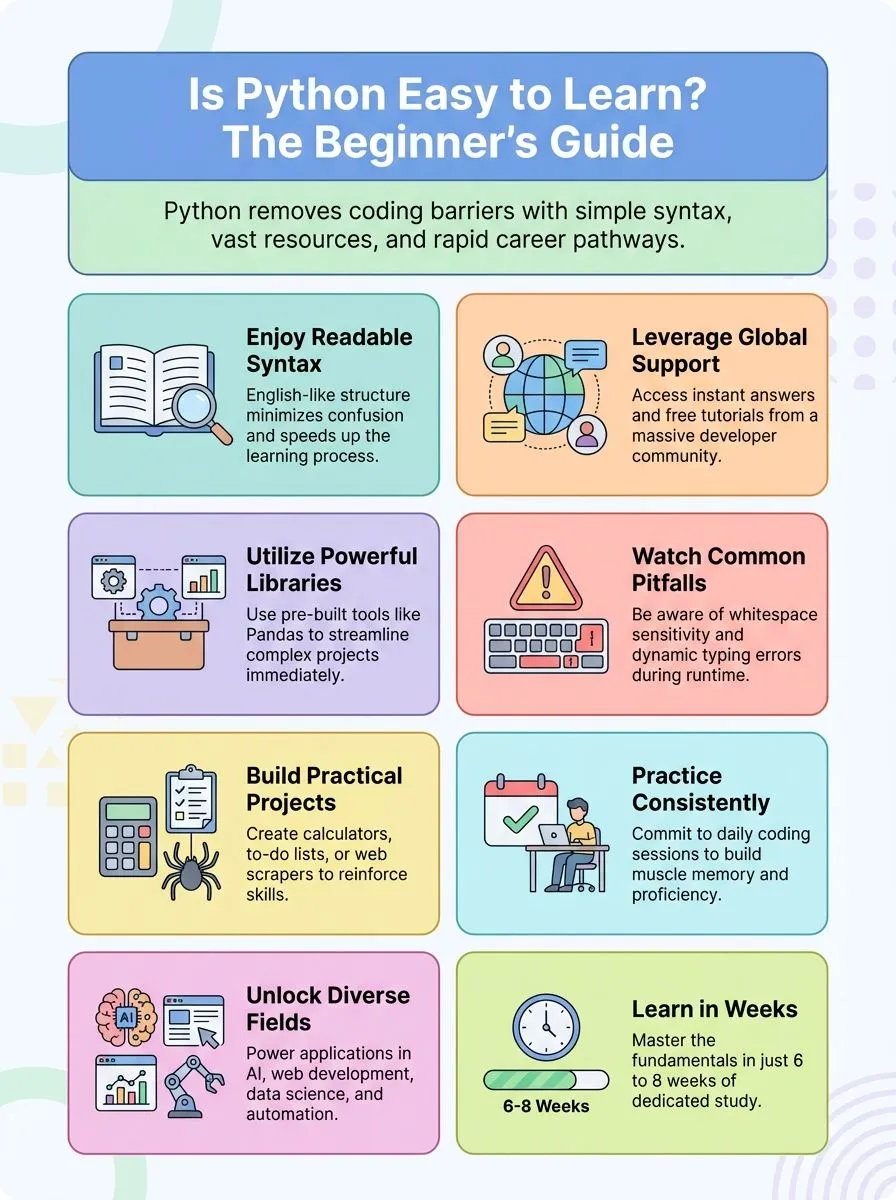
- Python’s English-like syntax and simple structure makes it perfect for beginners who want to learn programming quickly.
- Beginners can learn Python basics in 6-8 weeks with consistent practice, requiring about 250 hours of focused study time.
- Python’s large community provides fast support through forums, free tutorials, and extensive libraries for easy project development.
- Common beginner challenges include understanding *args/**kwargs, object-oriented programming concepts, and debugging runtime errors effectively.
- Python opens career doors in web development, data science, machine learning, and AI at companies like Google and Netflix.
Reasons Python Is Beginner-Friendly

Python stands out as an easy language for newcomers to programming. This high-level programming language removes many barriers that make other programming languages difficult to master.
What makes Python’s syntax simple and easy to read?
Python syntax looks like English, which makes it perfect for beginners who want to learn to code. The language uses simple words and clear structure that new programmers can understand quickly.
Unlike complex programming languages that need lots of symbols and brackets, Python keeps things clean and straightforward. This design helps people focus on solving problems instead of memorizing complicated rules.
The language uses whitespace and colons to organize code, creating a visual structure that makes sense. Python encourages one clear way to solve each problem, which reduces confusion for new coders.
This approach means beginners spend less time figuring out syntax and more time building their programming skills. The forgiving nature of Python syntax lets new programmers learn from mistakes without getting overwhelmed by technical details.
How does Python’s community and resources help beginners?
**Python’s Community Makes Learning Easier**
Python’s large, active developer community creates a safety net for new programmers. Beginners can find quick answers to coding problems on forums, social media, and Q&A sites. The community responds fast to questions, often within hours.
This open-source language benefits from constant contributions that expand libraries and resources. Free tutorials flood platforms like Python.org and practicepython.org, giving learners plenty of practice exercises.
The Python Package Index helps users find the right tools for their projects without spending hours searching.
Community members share job descriptions, skill lists, and interview tips for Python roles. New programmers discover project ideas and find mentors through online groups. Codingbag.com and similar sites offer interactive lessons that make learning fun.
Documentation stays current thanks to volunteer contributors who care about helping others succeed. The community’s size means beginners never feel alone in their coding journey. Learning resources keep growing as more people join the Python family.
These challenges with *args and **kwargs might seem tricky at first, but the community support makes them manageable.
Why is Python’s library support important for learners?
Python’s extensive library ecosystem transforms complex programming tasks into simple, manageable steps for beginners. Popular libraries like Pandas and Scikit-learn make data analysis and machine learning accessible to new learners without requiring years of coding experience.
These pre-built tools allow students to perform direct actions in code, eliminating the need to write everything from scratch. Alex Herrick from Web Design Booth notes that his team regularly uses Python libraries to streamline web development projects, cutting development time significantly.
Python’s library ecosystem enables learners to quickly build projects without needing to write everything from scratch.
The open-source nature of Python ensures libraries remain free to use and receive regular updates from the global developer community. New libraries continuously expand possibilities for beginner projects across web development, AI, data visualization, and productivity tools.
The Python Package Index serves as a centralized resource where learners can explore thousands of available libraries. Employers value Python skills partly due to this strong library support spanning various domains, making it one of the easiest programming languages for career advancement.
Common Challenges Beginners Face in Python
New Python learners often hit roadblocks that can make coding feel overwhelming, from confusing syntax features to complex programming concepts. These stumbling blocks are normal parts of the learning journey, and understanding what to expect helps beginners push through tough moments with confidence.
What are *args and **kwargs in Python?
Python programmers encounter *args and **kwargs when building flexible functions. These advanced features allow functions to accept variable numbers of arguments without defining each parameter beforehand.
The *args collects extra positional arguments into a tuple, while **kwargs gathers additional keyword arguments into a dictionary. Beginners often find these concepts confusing due to their unusual syntax and specific use cases.
Mastering *args and **kwargs becomes essential for advanced Python programming, though basic coding doesn’t require this knowledge. Documentation and online tutorials frequently address these features because new programmers struggle with their implementation.
Misuse of these argument handlers can create difficult debugging situations that frustrate learners. Understanding object-oriented programming concepts helps clarify how these flexible function tools work in real applications.
How can beginners understand object-oriented programming?
**Making Sense of Classes and Objects**
Object-oriented programming represents a major shift from basic coding approaches, but beginners can master this essential skill through practical steps. Classes serve as blueprints that define how objects should work, while objects are actual instances created from these blueprints.
New programmers often struggle with this concept because it requires thinking about code differently than simple line-by-line instructions. Joshua Correos has observed that students grasp OOP faster when they start with real-world examples, like creating a “Car” class with properties such as color and speed, then making specific car objects from that template.
**Building Strong OOP Foundations**
Understanding inheritance, encapsulation, and other core OOP principles becomes easier through hands-on practice with small projects. Beginners should focus on creating simple classes first, then gradually add complexity as their comfort level grows.
Python’s clean syntax makes learning these concepts more approachable than other programming languages, but the shift from procedural thinking still challenges many new learners. Real-world applications help solidify understanding, such as building a basic game where characters inherit traits from parent classes.
This programming paradigm opens doors to advanced Python topics and professional development opportunities that data scientists and software engineers use daily.
What are common debugging and error handling issues?
New Python programmers face several debugging challenges that can make learning programming feel overwhelming. Python’s interpreted nature means errors appear at runtime, catching beginners off guard who expect immediate feedback like compiled languages provide.
Indentation errors plague newcomers since Python relies on whitespace sensitivity, unlike languages that use brackets. Missing colons after function definitions or loops create syntax errors that confuse those learning Python from scratch.
Dynamic typing adds another layer of complexity, as variables can change types unexpectedly, leading to runtime errors that experienced programmers rarely encounter.
Stack traces and error logs intimidate beginners who lack experience reading these diagnostic tools. Many new coders struggle with exception handling because they don’t understand try/except blocks or how to catch specific errors properly.
Library-related errors frustrate learners when dependencies are missing or incorrectly installed, especially when working on Python projects or data science tasks. Print statements become the go-to debugging method for novices, though more sophisticated debugging tools exist.
Community forums like Stack Overflow and Python documentation provide solutions, but beginners often don’t know how to search for answers effectively. Understanding object-oriented programming concepts becomes crucial when debugging class-related errors.
Effective Tips for Learning Python
Learning Python effectively requires smart strategies that turn complex concepts into manageable steps… and these proven methods will transform your coding journey from overwhelming to exciting.
How to start with small, practical Python projects?
Small Python projects help beginners build real coding skills fast. These hands-on projects let new programmers see how their code works in the real world.
- Create a simple calculator that adds, subtracts, multiplies, and divides numbers. This project teaches basic math operations and user input handling. Beginners learn how to use variables and functions while building something useful for daily tasks.
- Build a basic to-do list application that saves tasks to a text file. This project shows how Python handles file operations and data storage. New coders practice working with lists, loops, and basic file management skills.
- Make a web scraper that pulls weather data from a simple website. This project introduces beginners to libraries like requests and BeautifulSoup. Learners see how Python connects to the internet and processes real data from external sources.
- Design a basic game like rock-paper-scissors or number guessing. Game projects make learning fun while teaching control flow and random number generation. These projects help beginners understand if-else statements and while loops through interactive play.
- Create an automated task that organizes files in a folder by type. This project demonstrates Python’s power for everyday automation. Beginners learn file system operations while solving a common computer organization problem.
- Build a simple password generator that creates secure passwords. This project teaches string manipulation and random selection methods. New programmers learn about security concepts while creating a practical tool they can actually use.
- Make a basic expense tracker that calculates monthly spending totals. This project combines math operations with data organization skills. Beginners practice working with dictionaries and lists while building financial management tools.
- Design a simple quiz application that asks questions and tracks scores. This project teaches data structures and user interaction patterns. Learners practice working with lists of questions while building engaging interactive programs.
Why is consistent practice important for learning Python?
Regular practice forms the foundation of mastering Python programming. Learning Python basics takes 6 to 8 weeks, but proficiency comes with regular coding sessions that build essential skills.
Frequent coding builds muscle memory and problem-solving abilities that separate successful programmers from those who struggle. Mastery in two months may require around 40 hours per week, approximately 250 hours of dedicated effort.
This intensive approach helps beginners absorb Python’s syntax, error handling techniques, and library usage patterns more effectively.
Consistent effort reduces the intimidation of complex topics like object-oriented programming and debugging challenges. Practice with real-world problems prepares learners for actual job requirements in data science, web development, and machine learning fields.
Regular practice helps reinforce syntax rules, making code writing feel natural rather than forced. Skipping regular practice leads to slower progress and gaps in understanding that become harder to fill later.
Python offers extensive libraries and frameworks, but only through repeated use can beginners truly understand how to leverage these powerful tools for their projects.
Which online courses and tutorials are best for beginners?
Practice helps build muscle memory, but finding quality learning materials makes the real difference. Top-rated platforms offer structured paths that guide new programmers from basic concepts to real projects.
- Python.org provides official tutorials that cover fundamental concepts like variables, data types, and loops in clear language that beginners can follow easily.
- Practicepython.org offers interactive exercises with step-by-step solutions that help learners gain hands-on experience through coding challenges and practical problems.
- Codingbag.com features beginner-friendly tutorials that break down complex programming concepts into simple, digestible lessons perfect for first-time coders.
- BrainStation Inc. delivers Python Certification (PPC) programs that provide structured learning paths with industry-recognized credentials for career advancement.
- Free online courses from major platforms include interactive quizzes and exercises that enhance retention while teaching essential programming skills.
- Community forums recommend top-rated courses based on user feedback and success stories from students who completed the programs successfully.
- Interactive learning platforms with exercises help beginners practice coding concepts immediately after learning new topics, reinforcing knowledge through repetition.
- Certification programs align with current industry demands and job opportunities, ensuring students learn skills that employers actually need in today’s market.
- Courses covering variables, data types, and basic libraries give learners the foundation needed to start building simple programs and understanding Python fundamentals.
Popular Python Applications for Beginners
Python opens doors to exciting fields that beginners can explore right away. These practical applications help new programmers see how their coding skills translate into real-world projects that matter.
How is Python used in web development?
**Python Powers Modern Web Applications**
Python drives back-end web development across major tech platforms and startups alike. Developers use Python to build scalable web applications that handle millions of users daily.
The language works seamlessly with databases and APIs, making complex web tasks simple to manage. Tech giants rely on Python for their web-based services because it delivers reliable performance.
Joshua Correos has seen firsthand how Python’s clean syntax helps teams build maintainable web applications faster than traditional languages.
**Quick Start with Django and Flask**
Beginners can learn python web frameworks like Django and Flask within weeks of starting their coding journey. These frameworks enable rapid prototyping, allowing new developers to create personal blogs and portfolio sites as practice projects.
Python’s web development libraries streamline the entire process from concept to deployment. The language’s simple structure makes web application code easy to read and debug, even for those just getting started with python programming.
Creative professionals often choose Python for web projects because it lets them focus on design and functionality rather than complex syntax.
What role does Python play in data analysis and visualization?
Python stands as a leading language for data analysis and visualization, transforming how professionals handle large amounts of data across industries. Libraries like Pandas and NumPy make complex data manipulation tasks simple for beginners and experts alike.
Data analysts rely on these python-related tools to process CSV files, clean datasets, and extract meaningful insights from raw information. The language’s straightforward syntax allows non-programmers to enter data-focused roles without years of coding experience.
Python dictionaries and lists serve as essential building blocks for organizing and manipulating data structures, making it easier to sort through massive datasets.
Visualization becomes effortless with Python’s integration into tools like Matplotlib, enabling users to create professional charts and graphs with just a few lines of code. Data science projects benefit from Python’s open-source libraries that simplify statistical computations and trend analysis.
Industries use Python for reporting and business intelligence, helping companies make data-driven decisions faster than ever before. The combination of data manipulation capabilities and visualization tools makes Python an ideal choice for anyone interested in data science careers.
Machine learning engineers often start their journey by mastering these fundamental data analysis skills before moving into more advanced applications.
How is Python applied in machine learning and AI?
Python drives the machine learning industry, which experts project will reach $31 billion in value. Tech giants like Google use Python to build AI applications that millions of people interact with daily.
The language’s simple syntax helps developers create machine learning models faster than other programming languages. Popular libraries such as Scikit-learn and Pandas make complex data analysis tasks feel manageable for newcomers.
Beginners can start experimenting with machine learning using Python’s accessible tools and sample datasets right away. TensorFlow and other frameworks integrate seamlessly with Python code, letting creative professionals build everything from computer vision projects to natural language processing applications.
The open-source community constantly releases new AI libraries, keeping Python at the forefront of artificial intelligence development. Entry-level roles in machine learning sectors especially value Python proficiency, making it a smart first language choice for anyone wanting to break into the AI field.
What Can You Do With Python?
Python enables careers in web development, data science, machine learning, AI, automation, and desktop application development. Industry leaders such as Google, Facebook, YouTube, and Netflix rely on this programming language for their core operations.
Creative professionals can build custom websites, analyze social media trends, and automate repetitive tasks that eat up valuable time. Data scientists use Python to create stunning visualizations that tell compelling stories with numbers.
Machine learning enthusiasts develop intelligent systems that can recognize images, predict trends, and make smart recommendations.
Python’s versatility lets users create productivity tools, automate tasks, and develop games that engage audiences across multiple platforms. The language serves as a bridge between different tech fields, making interdisciplinary communication smoother and more effective.
Freelancers and content creators can build custom scripts to manage their workflows, analyze their audience data, and optimize their online presence. Python’s global popularity opens doors to job opportunities in diverse sectors, from entertainment companies like Netflix to tech giants like Google.
Learning Python simplifies the process of acquiring additional programming languages, making it a smart investment for anyone serious about building technical skills.
How Long Does It Take to Learn Python as a Beginner?
After exploring Python’s vast applications, many aspiring programmers wonder about the time commitment needed to master this versatile language. Beginners typically take 6 to 8 weeks to learn Python fundamentals through consistent study.
Those who dedicate about 40 hours per week can achieve mastery in two months, totaling approximately 250 hours of focused learning. The average time to learn Python basics ranges from 5 to 10 weeks, depending on prior programming experience and study intensity.
Learning Python for data science requires additional time due to specialized libraries like Pandas and complex statistical concepts. Data science applications can take 3 to 12 months to master effectively.
Two weeks of full-time study covers basic syntax and simple programming concepts, but true proficiency demands ongoing practice and real-world application. Self-learning Python proves feasible for motivated individuals, though structured python courses often accelerate the learning process.
Basic high school math helps with certain applications, but mathematical expertise isn’t required to write code successfully. Joshua Correos has observed that students with consistent practice schedules progress faster than those who study sporadically, regardless of their initial programming background.
Conclusion
Python stands out as one of the best programming languages for beginners to learn. The simple syntax makes coding feel natural, while the strong community provides endless support.
Creative professionals and tech enthusiasts find Python opens doors to exciting projects in web development, data analysis, and machine learning. Learning Python takes time and practice, but the rewards make every effort worthwhile.
Start small, stay consistent, and watch your coding skills grow into something amazing.
Discover the vast possibilities and applications of Python by exploring what you can do with Python.
FAQs
1. Is Python really easy for beginners to learn?
Python is easy for beginners because it reads like the English language. The fundamentals of python use simple words and clear structure, making it a great first language for new programmers.
2. What is the best way to learn Python programming?
Start with the basics of python by installing python on your computer first. Learn enough about data structures and algorithms, then practice programming in python with real projects.
3. Do I need to install Python before I can start learning?
Yes, you need to install python on your computer to write and run code. Python 3 is the best python version to download for beginners who want to learn python.
4. What makes Python different from other programming languages to learn?
Python uses fewer lines of code than Java or C programming language. Functions in python are easier to write, and the language is easy to learn compared to complex languages like Raku.
5. Can beginners use Python for data science work?
Python works great for data using libraries like Pandas software. Many people learn python for data science interview preparation because it handles data and information visualization well.
6. What programming concepts should beginners focus on when learning Python?
Focus on objects and classes, functions in python, and basic programming concepts first. Learn the basics of python before moving to intermediate python topics or trying to learn python the hard way.